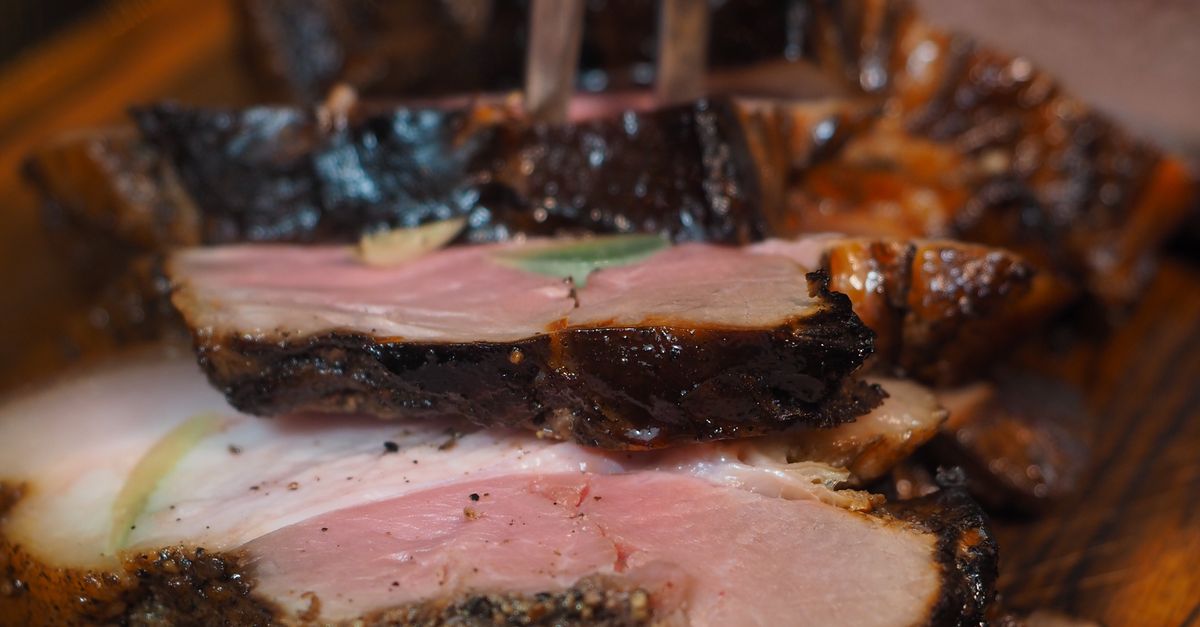
Raw dough is pale and bland. The same dough, pulled from a hot oven, is golden, fragrant and irresistible. Raw steak is grey-pink and metallic; a seared one is brown, crusted and savoury. The flavour of cooked food — the toast, the crust, the char, the roast — is largely the work of a single sprawling chemical process named after a French physician who described it over a century ago. Meet the Maillard reaction, the most delicious chemistry on Earth.
A reaction between sugars and proteins
The Maillard reaction is, at its heart, a meeting between two ordinary ingredients found in almost all food: amino acids (the building blocks of proteins) and reducing sugars such as glucose and fructose.
When food is heated, these two react. A sugar molecule latches onto an amino acid, and the resulting compound is unstable. It rearranges, breaks apart, and recombines in a cascade of further reactions. One reaction begets another, and another, branching out into a tangle of new molecules.
This is what makes Maillard chemistry so rich — and so hard to pin down. It is not one reaction but a whole network, producing hundreds of different compounds depending on the ingredients, the temperature and the time. That complexity is precisely why browned food tastes of so much more than its raw components.
Why it needs heat and a dry surface
The Maillard reaction proceeds meaningfully only at high temperatures — generally above about 140°C (285°F). Below that, it crawls along too slowly to matter on a kitchen timescale. This is why gentle poaching or boiling never browns anything.
And here is the catch that frustrates every cook: water is the enemy of browning. As long as a food's surface is wet, it cannot climb above the boiling point of water — around 100°C (212°F) — because all the incoming heat goes into evaporating moisture rather than raising the temperature. Only once the surface has dried out can it shoot up into Maillard territory.
The “Aha!” Moment
A wet surface can't brown — it's stuck at the temperature of boiling water until it dries. That single fact explains why you pat a steak dry before searing, why a crowded pan "steams" instead of browning, and why the crispiest roast potatoes come from ones that have been parboiled and roughed up to maximise dry, exposed surface area.
Maillard is not caramelisation
The two are often confused, and they do overlap, but they are distinct.
- Caramelisation is what happens when you heat sugar alone. The sugar molecules break down and recombine, producing colour and a characteristic toffee-ish flavour. No protein required. It typically needs even higher temperatures.
- The Maillard reaction requires both a sugar and an amino acid, and it produces a far broader, more savoury, often meaty or roasted range of flavours.
In real cooking the two frequently run side by side — the crust of a loaf, the surface of a roast, the skin of a roasted onion are doing both at once. But the deep savoury complexity we associate with "cooked" flavour is mostly Maillard's doing, while caramelisation contributes the sweeter, more one-note edge.
Why browned food tastes so good
The payoff of all that chemistry is flavour and aroma. The Maillard network generates hundreds of distinct volatile compounds — molecules light enough to drift into the air and reach your nose, which is where most of what we call "taste" actually happens.
These compounds carry the descriptors we crave: roasted, nutty, malty, meaty, toasty, savoury. No single molecule smells like "toast" or "seared steak"; the sensation is the combined impression of a whole orchestra of them at once. Different starting ingredients tilt the mix in different directions, which is why browned bread, browned beef and browned coffee all smell distinct despite sharing the same underlying chemistry.
The Science Behind It
Certain amino acids steer the aroma in characteristic directions. The breakdown of the amino acid proline contributes to the smell of fresh bread crust, while sulphur-containing amino acids help generate the roasted, savoury notes of cooked meat. The exact bouquet depends on which amino acids and sugars are present — the reason a coffee bean and a steak, both heavily browned, smell nothing alike.
The reaction in your everyday kitchen
Once you know what to look for, the Maillard reaction is everywhere:
- Toast. Pale bread, dry surface, dry heat — the textbook case. The browner the toast, the further the reaction has run.
- Seared steak. The savoury crust on a properly seared steak is Maillard browning of its surface proteins and sugars; the famous "sear" is flavour chemistry, not "sealing in juices".
- Roasted coffee. Green coffee beans are grassy and acidic. Roasting drives the Maillard reaction and develops the deep, complex aromas we recognise as coffee.
- Roast meat, fried onions, baked pastry, grilled vegetables, the crust on a burger. All the same chemistry, different ingredients.
It even shapes how we cook. Browning the meat before adding liquid to a stew, then simmering, gives you both worlds — Maillard flavour from the dry sear and tenderness from the wet braise. Reverse the order and the moisture would keep the surface too cool and wet for any browning to occur at all.
The browning that built our cuisine
The Maillard reaction is so woven into cooking that we rarely notice it as chemistry — we just call it "cooked". But nearly every flavour we describe as warm, deep, roasted or savoury traces back to those first encounters between a sugar and an amino acid under heat. Master the simple conditions it demands — high heat, a dry surface, a little patience — and you are not just following a recipe. You are running one of the oldest and most rewarding chemical reactions humans have ever harnessed.