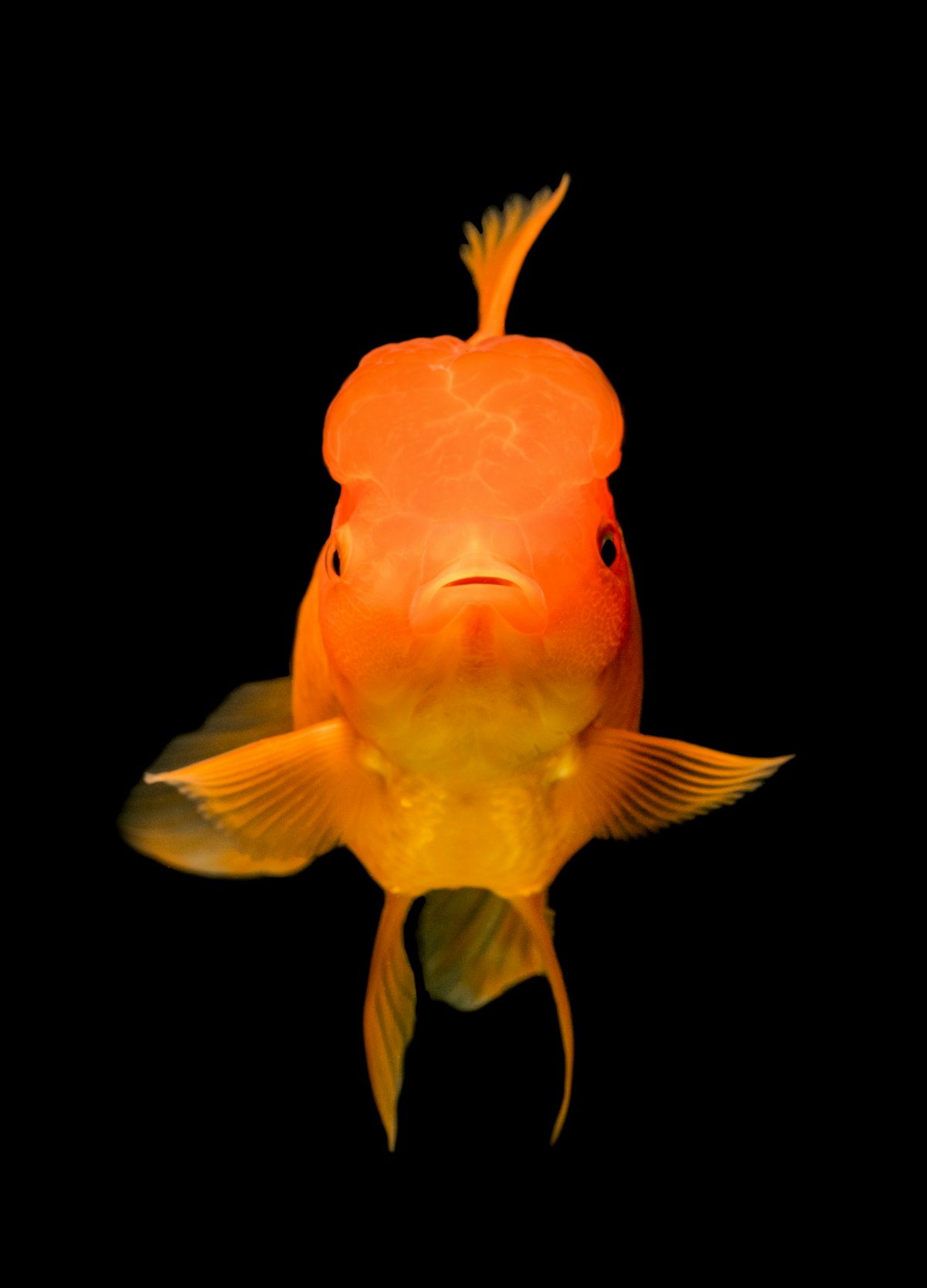
It's one of the most repeated facts about the animal kingdom: a goldfish's memory lasts just three seconds, so its whole world resets with every lap of the bowl. It's a tidy, almost comforting idea. It is also entirely wrong. Decades of research show that goldfish are capable, trainable learners with memories measured in weeks and months — not seconds.
The three-second goldfish is a cultural shorthand for forgetfulness, the sort of "fact" that gets passed around dinner tables and pub quizzes without anyone stopping to ask where it came from. When scientists actually put goldfish to the test, a very different animal emerges: one that learns routines, recognises patterns, anticipates feeding times, and remembers what it has learned long after the lesson ends.
Where the Three-Second Myth Came From
No single experiment ever "discovered" the three-second memory. The figure has no scientific origin at all — it appears to be a piece of folklore that grew up alongside the goldfish bowl itself.
The likely logic behind it is a kind of moral convenience. A creature endlessly circling a tiny, featureless bowl seems less pitiable if you assume it can't remember the last lap. The myth may also have been reinforced by the goldfish's reputation as a "starter pet" — small, cheap, and not obviously expressive — which made it easy to assume there wasn't much going on behind those eyes.
Whatever its roots, the claim spread because it was memorable and harmless-sounding, not because anyone had measured it. And once a fact is repeated often enough, it tends to survive on familiarity alone.
What the Research Actually Shows
Animal behaviour researchers have studied fish learning for the better part of a century, and goldfish are among the more frequently tested species. The consistent finding is that goldfish form lasting memories and modify their behaviour based on experience.
In classic conditioning experiments, goldfish learn to associate a signal — a light, a sound, a particular colour — with food. Once trained, they keep responding to that signal for weeks or even months afterward, well beyond anything a three-second memory could allow. Researchers have also trained fish to push levers, swim through specific gates, and navigate simple mazes to reach a reward.
One especially telling line of work showed that fish could be trained to feed only at a particular time of day. The fish learned to gather at the feeding spot in anticipation, then maintained that learned timing even after a long break — demonstrating both memory retention and an internal sense of routine.
The Science Behind It
Goldfish learn through associative conditioning, the same basic mechanism that lets a dog learn that a lead means "walk." When a neutral cue reliably predicts food, the fish's brain links the two. The fish then responds to the cue alone — anticipating, approaching, and preparing to feed. This isn't a reflex that vanishes seconds later; it is a durable memory that can persist for months.
The Aquarium Keeper's Everyday Evidence
You don't need a laboratory to see this in action. Anyone who keeps goldfish will recognise the behaviour: the moment a familiar person approaches the tank, the fish rise to the surface and crowd toward the front, clearly expecting to be fed.
This is learned recognition, not coincidence. Goldfish can distinguish the routines and even the appearance of regular feeders from strangers, and they adjust their behaviour accordingly. They learn the geography of their environment, remember where food tends to appear, and settle into predictable daily rhythms.
- They anticipate feeding times and gather in advance.
- They recognise and respond differently to familiar caretakers.
- They learn the layout of their tank and where resources are.
- They can be trained to perform simple tasks for a reward.
The “Aha!” Moment
If your goldfish swims excitedly to the front of the tank when you walk into the room, it isn't experiencing the moment for the first time. It remembers you — or at least remembers that your arrival reliably means food. That little burst of anticipation is a three-second memory's worth of evidence that the three-second memory doesn't exist.
Fish Are Smarter Than We Gave Them Credit For
The goldfish myth is part of a broader, slowly correcting bias: the assumption that fish are simple, near-mindless creatures. Modern research on fish cognition has steadily dismantled that picture across many species.
Fish have been shown to use landmarks for navigation, learn from watching other fish, recognise individual tankmates, and remember social relationships. Some species cooperate while hunting; others use tools or solve problems to access food. None of this requires us to romanticise fish or imagine they think like humans. It simply means their behaviour is richer and more flexible than the "goldfish bowl" stereotype suggests.
The three-second memory persisted partly because it fit a comfortable assumption about where fish sit in the hierarchy of intelligence. When researchers actually tested that assumption, it didn't hold.
Why the Myth Still Matters
This might seem like harmless trivia, but the belief has real consequences. If you assume a goldfish can't remember or perceive much, it's easy to justify keeping one in a small, bare bowl with nothing to do. Understanding that goldfish learn, remember, and respond to their surroundings reframes them as animals with genuine welfare needs — space to swim, an enriched environment, and stable routines.
It's also a useful reminder about how "facts" travel. The three-second memory survived for decades not because anyone verified it, but because it was easy to repeat and pleasant to believe. A quick look at the evidence is often all it takes to tell the difference between a real fact and a well-worn myth.
So the next time someone trots out the three-second goldfish, you can offer the better story: a small, bright-eyed fish that knows its feeding time, recognises the hand that feeds it, and remembers far more than we ever gave it credit for.